
Transcript
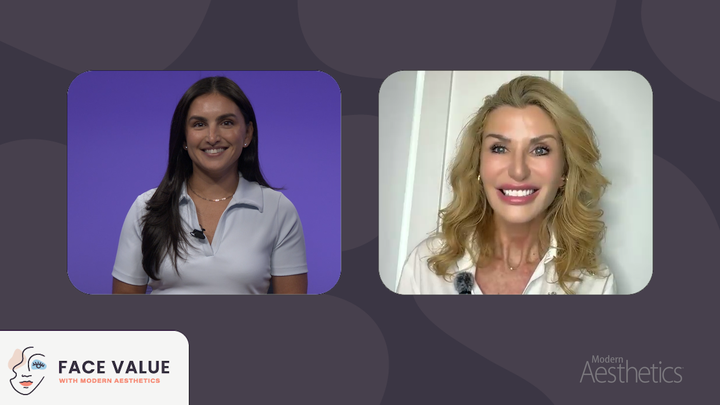
Breanna Clark: Welcome to Face Value with Modern Aesthetics. I'm your host, Breanna Clark, and I am joined today by Dr. Ivy Igerc, an aesthetic physician who has practiced in the United Kingdom, Croatia, Slovenia, Italy, India, South Korea, and China. We're excited to talk with her about personalizing aesthetic medicine. Dr. Ivy, thank you for joining us. You have practiced in seven countries in Europe and Asia. How do different skin types and ethnicities require a more personalized approach to aesthetic treatments?
Dr. Ivy Igerc: So, I learned quite early that every face needs its own bespoke approach. And when we talk about Far East Asians, and when we talk about Europeans, so Caucasian face, there is a huge difference.
My trademark treatment called face design came out of those differences, and came out as an answer to bequite bespoke and to be very orientated on a cephalometric analysis of the face, as well as facial vectors, protecting while doing rejuvenation of each and every face its own standard cephalometric analysis.
So we know that in Asian faces we have maybe temporal hollows, we have much wider maxilla, we have different positions of the mandible and mandibular angles. So we have to, when reconstructing Asian faces, think about that. While the Caucasian face is more longand, anddoesn't have this approach. In an Asian face, we need to think about lateral framework and as well as vertical projection.
Well, it'sa completely different approach to the Caucasian face. So I was practicing in different countries. I was based in Hong Kong. I was practicing in different Asian countries as well as different European countries. And what I find out, it'svery important to know differences in anatomy of all those people and faces, as well as differences in social aspects of beauty.
So, the same thing is not beautiful in China as it is in the UK, for example. So we have to know, we have to step back from our personal judgment and understand the country and aspects of beauty from the country we are delivering aesthetics to. Funny enough, because I'mpracticing also around Europe, as you said, it's already little differences in different European countries.
So Switzerland, Croatia, Slovenia, Italy, Austria, every of those nations has a different aspect of beauty, in comparison, for example, to English ladies or my English patients. And it's really fine, but we have to understand social aspects of those countries where we do facial aesthetics.I think it'svery, very important.
Breanna Clark: Can that even vary within one country? At your practice in London, an Asian patient born in the UK may have different priorities than an Asian patient who just moved there from China.
Dr. Igerc: Yes, 100%. So one Asian patient who's grown up in London has completely different aspects of beauty and expectation from me than an Asian patient coming directly from Asia.
So the Asian patient coming directly from Asia has very, very high expectations. Their aesthetic is very advanced, so he always needs layering, he needs structural changes. He needs also entrance into rejuvenation, at least a kickstart. While Asian patients who are brought up in London are more conservative because the country and aesthetics is not so advanced as in Asia.
Breanna Clark: And how do some of the tools available today make that personalized approach more possible?
Dr. Igerc: Well,we live in a beautiful age. I also practice in biotech and work in biotech, so I do medical, set up medical trials for different injectables, and I'm quite knowledgeable about chemistry behind those injectables.
And I always stress when I train doctors that it'svery, very important to know what goes under the skin because it reflects ... We have to use our materials in the best possible way, and it's not the same where we are going to inject different injections depending, depending on rheology, cross-linkage, andalso amount of hyaluronic acid, if you talk about fillers.
Soit'svery, very important to understand the biotech sideof our work. And we are living in the era where we have a lot of different injectables on the market. We have the possibility to really precisely tailor-made aesthetics, as well as we entered in the world of regenerative medicine, which is very important.
So my big passion lies in stem cells, and I started very early. It was the year 2006 when I got entrance into regenerative medicine, through bone augmentation with BMP proteins, which were signaling to stem cells to produce more osteoblasts. And in that way, we could gain bone. And this was mind-blowing for me because, in the same way and the same approach, working on stem cells, you can see complete rejuvenation and regeneration of tissues.
And I truly believe the future lies in regenerative techniques in the face andthat in the future we are going to see beautiful biotechnological architecture of the face with rejuvenation and engineering of different tissues.
Breanna Clark: What are some of the recent trends or technologies that you've seen in your travels that have been most interesting or could be the most impactful in the future?
Dr. Igerc: I'm very pleased to see that actually regeneration of tissues and tissue engineering started to become a big, big topic everywhere, especially in Asia. In Asia, the layering techniques are very important, and this is more and more happening in the Western world as well. Different types of injectables under the skin, which are supporting the ligaments on the face as well as periosteal deformities on the face.
And also polynucleotides, glutathione, different amino acids, peptides. We talk a lot about peptides, but they're still not FDA approved, so I would remove them now from the picture. And exosomes, they're bringing beautiful possibilities of tissue engineering and rejuvenation of the face. So every one of my treatments, like face design, which bring structural change and structural re-enhancement of the face, is definitely finishing with the cocktails of regeneration and rejuvenation, which I start in the clinic.
But then the big question was how my patients could continue doing that at home. Because we know that with regeneration and with reprogramming of the signaling of the cells, we definitely have to keep signaling along the way. Soit's not enough that you come to the clinic and one time reprogram the signal and then come back maybe in three months' time.
Something had to be done at home. That's why I came up with the Dr. Ivy Exosome Regimen, together with LED light and amplifying all the power of exosomes with also low-level laser therapy. I think this is a beautiful tool and the way for my patients to bring a little bit of this regenerative clinic at home and be able to work on their face and be able to stabilize signaling to the cells as well.
Because we know that in regenerative medicine, a very important thing is continuous work. Soin that way, we can have the best possible results.